
QuickTake 100 (1994)
One of the first digital cameras for consumers: designed by Apple with a Kodak sensor in 1994, it held eight photos and cost $749.
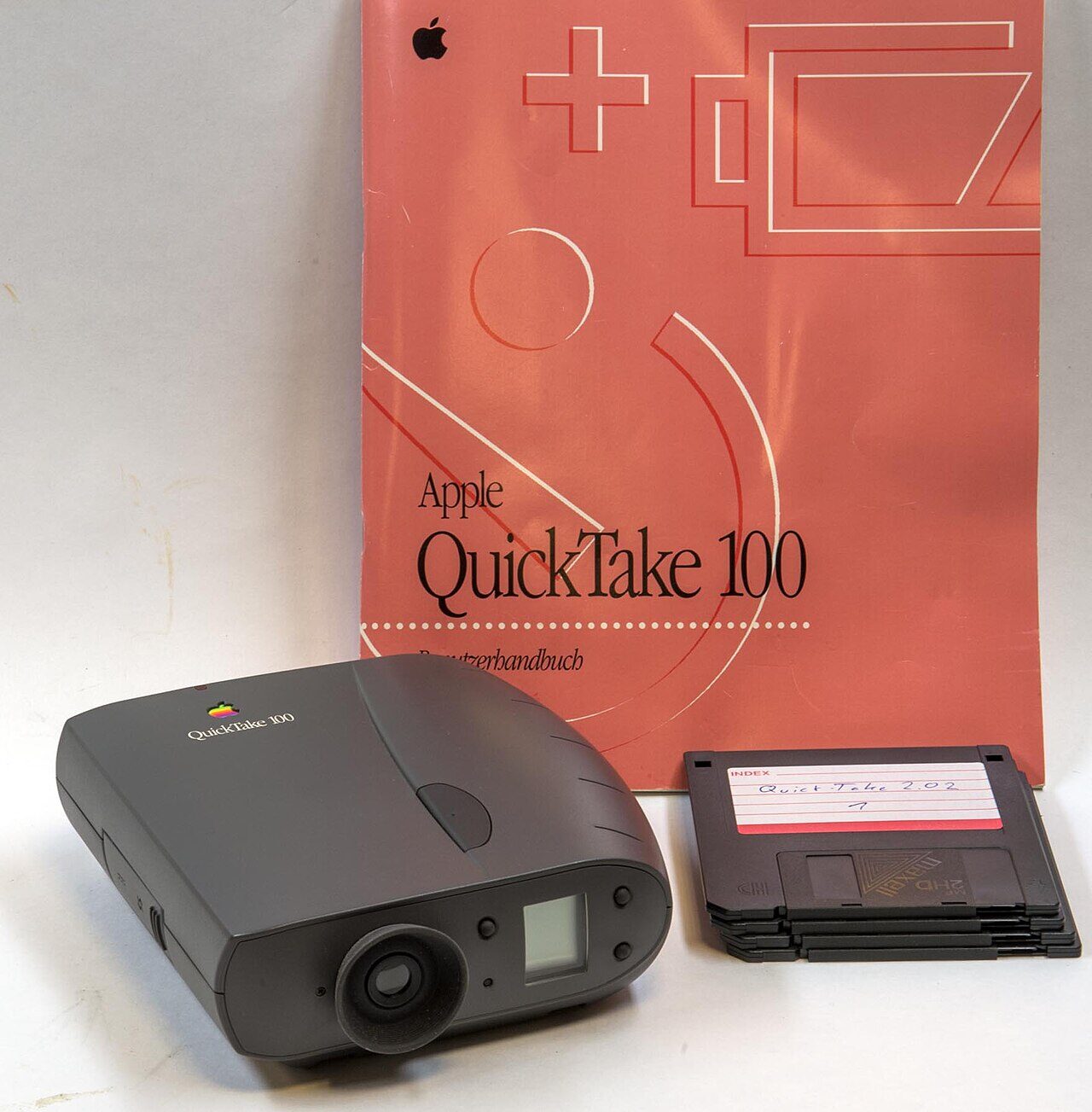
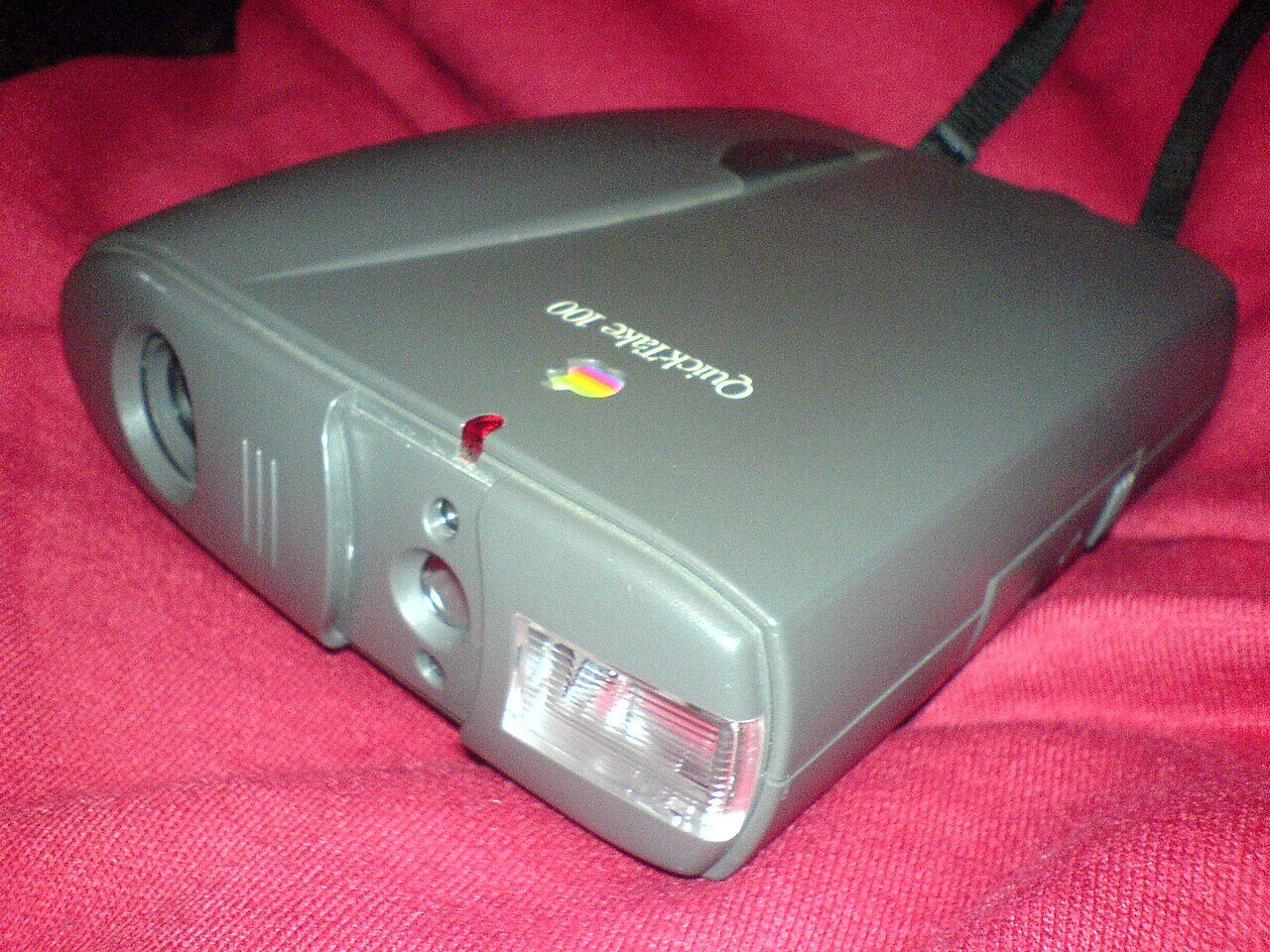
© Hannes Grobe · CC BY-SA 4.0 ↗ © jaqian · CC BY 2.0 ↗ Resized, no crop or retouching.
Specs
| Chip | CCD Kodak · 640×480 (0,3 Mpx) |
| Storage | 1 MB (8 × 640×480 / 32 × 320×240) |
| Weight | 500 g |
| Connectivity | RS-232 (DIN) |
| Price | $749 |
| Key feature | QuickTake 150 (1995) · QuickTake 200 (1997) |
Launch
Unveiled on February 17, 1994 at MacWorld Tokyo and on sale in June for $749. Under the codename «Venus», Apple designed the body and interface, Kodak supplied the CCD sensor and Chinon built the camera. It was one of the first digital cameras aimed at consumers and the first practical one under $1,000, at a time when Kodak's professional options cost more than $10,000.
Marketing
Apple sold it as the digital camera for everyone: plug it into a Mac (and later Windows) with a serial cable and see your photos on screen, no film, no developing. The design did not imitate film cameras - it looked almost like a projector - and it won an industrial design award in 1995. It found its audience in schools and small businesses, but the established camera brands (Kodak, Canon, Nikon, Fujifilm) jumped in quickly and took the market.
Flaws and fixes
The 1 MB memory held only eight photos at full resolution; with no preview screen and no way to delete individual shots (a recessed button erased everything), you had to get it right the first time - like film, but without its capacity. Photos used a proprietary format that had to be converted to TIFF or JPEG with the bundled software. The QuickTake 150 (1995) improved compression and the 200 (1997, now built by Fujifilm) added an LCD screen and SmartMedia cards. Even so, when Jobs returned to Apple in 1997 he streamlined the catalog and the QuickTake line was gone: today it is a collector's item.