
Macintosh LC (1990)
Macintosh LC (1990): Macintosh with a 68020 at 16 MHz, one LC PDS slot, 2 MB of RAM and 512 × 384 video.
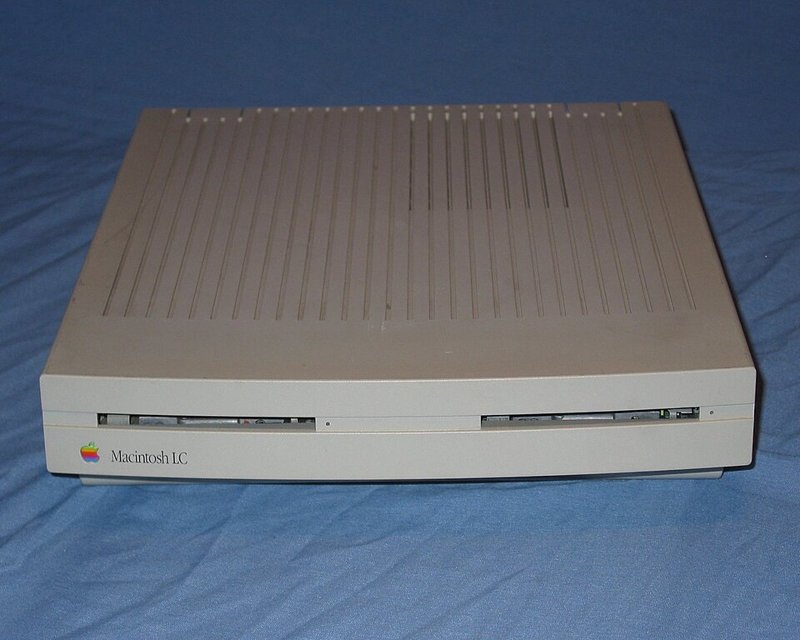

Specs
| Release | 1990-10-15 |
| Chip | 68020 · 16 MHz |
| RAM | 2–10 MB |
| Display | 512×384 · 640×480 |
| Ports | LC PDS · ADB · DB-15 · SCSI |
| System | 6.0.7 → 7.5.5 |
| Weight | 4.0 kg |
| Dimensions | 74 × 310 × 389 mm |
| VRAM | 256 KB (expandable to 512 KB) · with 512 KB: 640×480 at 8-bit |
| Storage (detail) | 1.44 MB floppy drive · 40 or 80 MB SCSI hard drive · last Mac with two internal floppy drives |
| Expansion slots | 1 × LC PDS (accepts the Apple IIe Card) |
| Period displays | 12″ AppleColor (512×384; $599) or 13″ Trinitron (640×480; $999) |
| Networking | LocalTalk over serial · optional Ethernet via PDS |
Launch
Apple introduced it on October 15, 1990 alongside the Macintosh Classic and Macintosh IIsi, and it was sold until March 23, 1992, when the LC II (with 68030) replaced it. The initials stand for "Low Cost": the first affordable color Macintosh, aimed at homes and schools, in a "pizza box" case. Dates and details: EveryMac and Wikipedia.
Marketing
Apple designed it so school boards could buy a Macintosh at Apple IIGS prices; by May 1992, 560,000 had been sold, more than half into homes and schools, and Apple said it helped regain education market share lost to cheap PC clones. The Apple IIe Card (PDS slot) ran Apple II software and went into about half of schools' LCs. (Wikipedia, citing Macworld 12-1990.)
Flaws and fixes
Apple documents no model-specific defects in the sources consulted. Limits that do appear in its spec sheet: RAM of 2 to 10 MB using 30-pin SIMMs installed in pairs; a single ADB port; 8- or 16-bit video at 512 × 384 and 4- or 8-bit at 640 × 480, depending on VRAM (256 or 512 KB).
Open advertising space · We want you here!
Advertise hereOpen advertising space · We want you here!
Advertise hereMore from the same family
Updated: October 29, 2026 · Sources: Apple Soporte · Apple Tech Info Library · Compare this product