dimensionapple Lab · Apple · Initial base · Data as of Nov 4, 2026
Patents in figures
Figures, drawings and links to products. A laboratory to study launch times.
We are conducting a study and we will continue to expand the information.
This experimental section will incorporate new sources, data and documented links as the research progresses.
Documented historical data are separate from hypotheses about the future. This is not an exhaustive census, it does not establish whether patents remain in force, and no predictive algorithm has been implemented or validated.
1. How many: annual US patent grants
IFI Claims ranking: patents granted to Apple each year. Method limit: IFI states on its 2016 pages that it counts only utility patents; this has not been confirmed for 2024-25, so those two figures may not be comparable. 2014 and the years before 2013 are missing.
Annual patent grants attributed to Apple by IFI (US; 2024-25 method unconfirmed)
2. What a patent looks like: examples with drawings
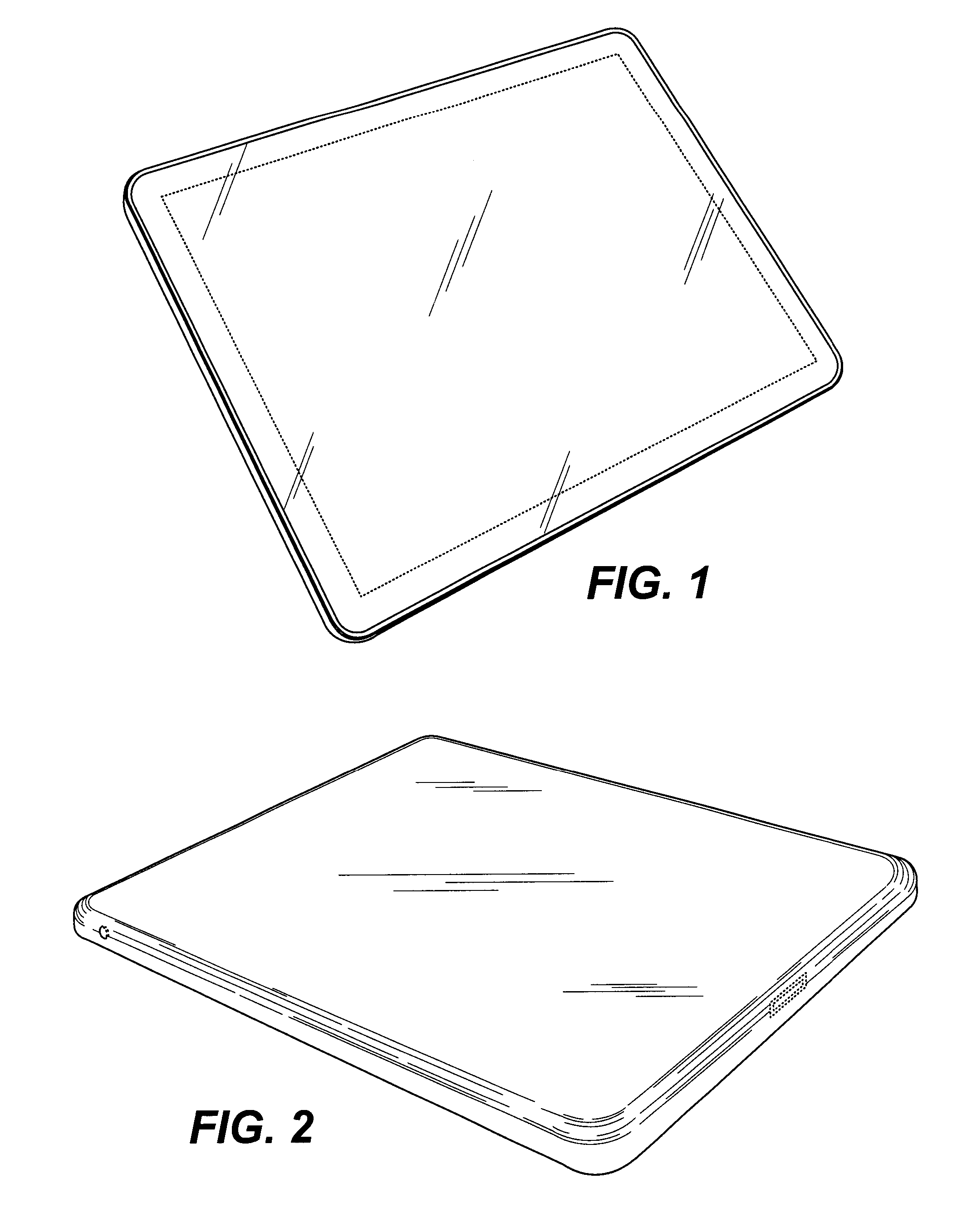
A document identifies number and type, title, inventors, assignee and dates. Includes drawings, description and claims. In a design patent, the figures are central. It is not a guide to processing a patent.
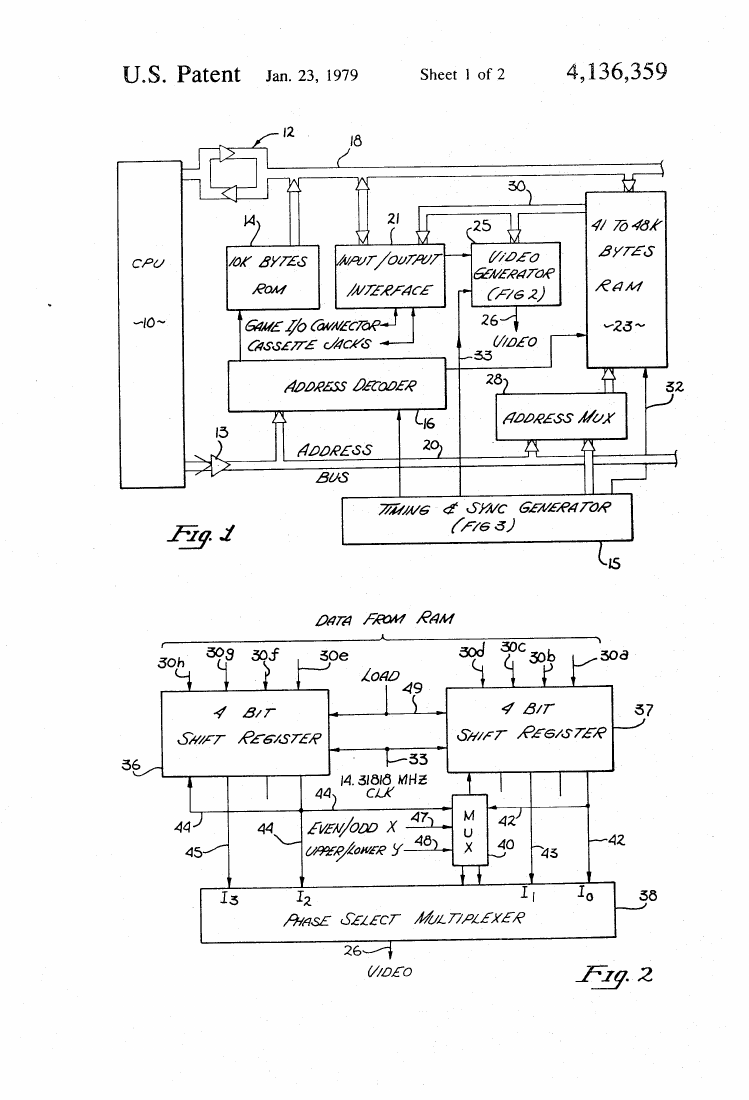
US 4,136,359
Filed: 1977-04-11 · Granted: 1979-01-23
Microcomputer for use with video display. Stephen G. Wozniak; Apple Computer. The National Inventors Hall of Fame links it to the personal computer, but this does not establish a specific commercial model.
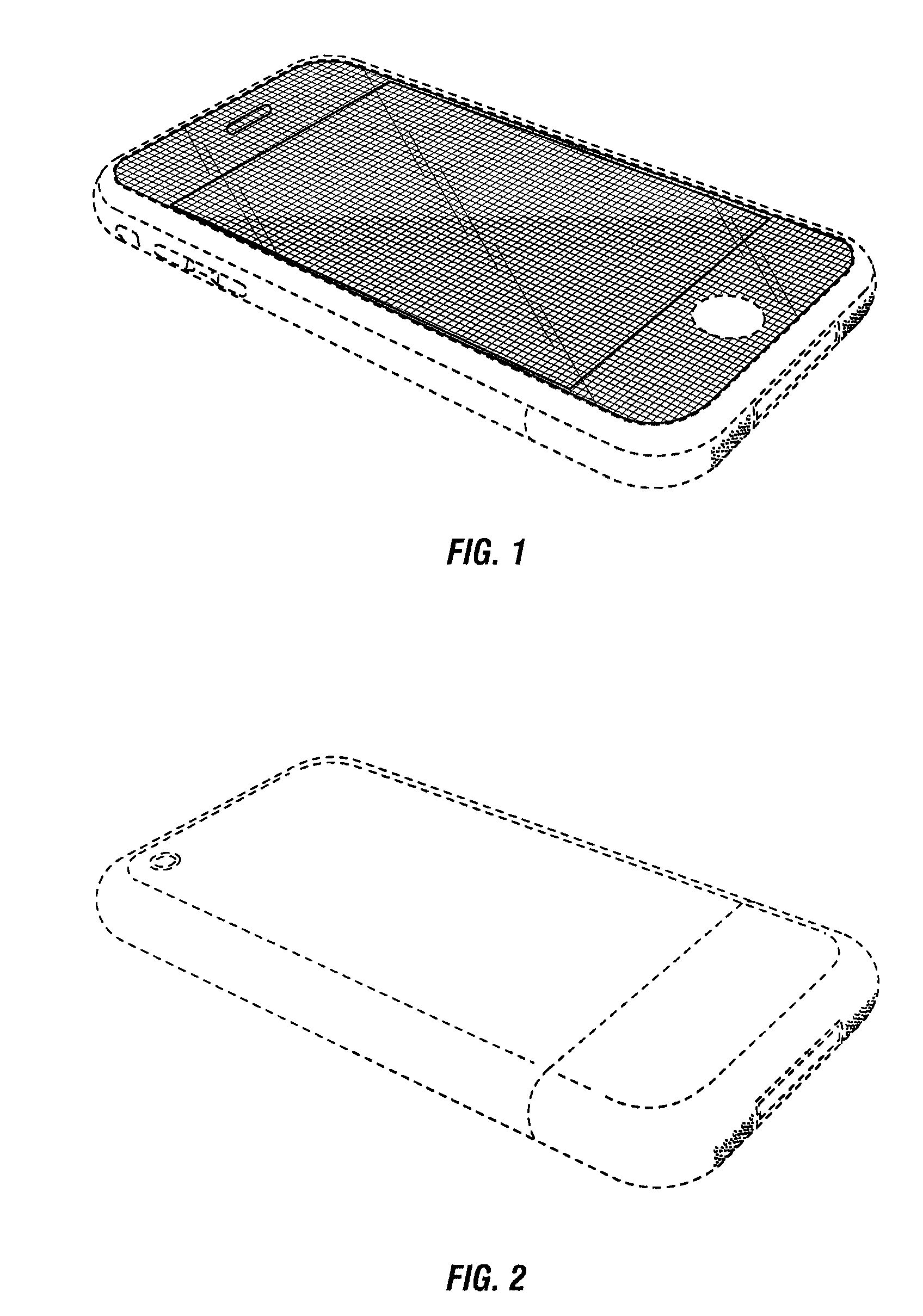
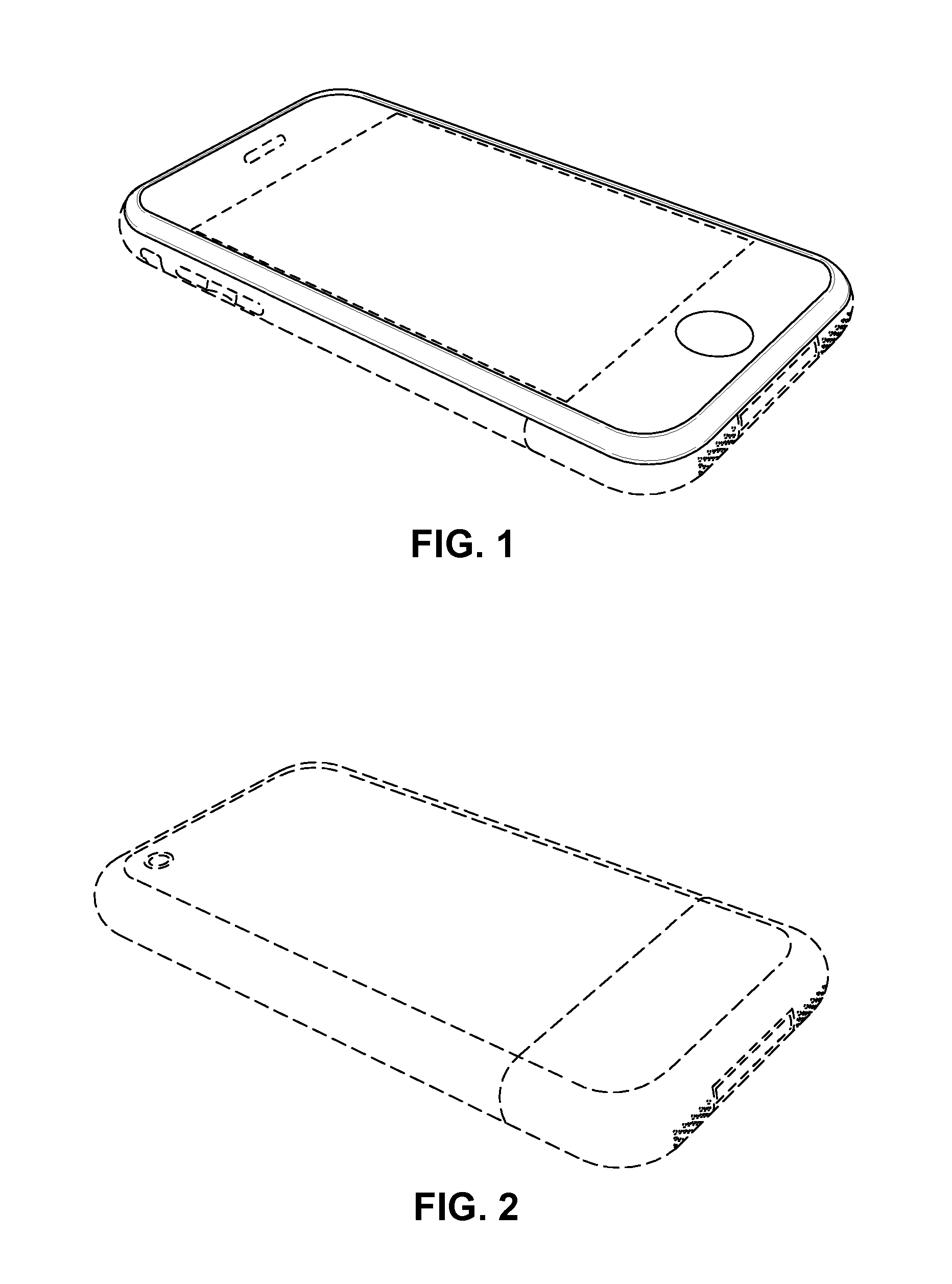
Electronic device. Design of the front face of a phone. The CAFC14-1335 ruling documents elements embodied in the iPhone, it does not identify the first model here.
Text and figures from granted patents. The USPTO says text and drawings are normally free of copyright restrictions unless a notice states otherwise (37 CFR 1.71(d) and 1.84(s)); no such notice was found in these five examples. This is not legal advice. USPTO Rule and Exceptions.
3. Patent and product: documented links only
Unit = commercial product. Several patents for the same iPhone are not independent cases. A generic title does not prove or rule out a link; The criterion is document plus drawing.
iPhone: strong link
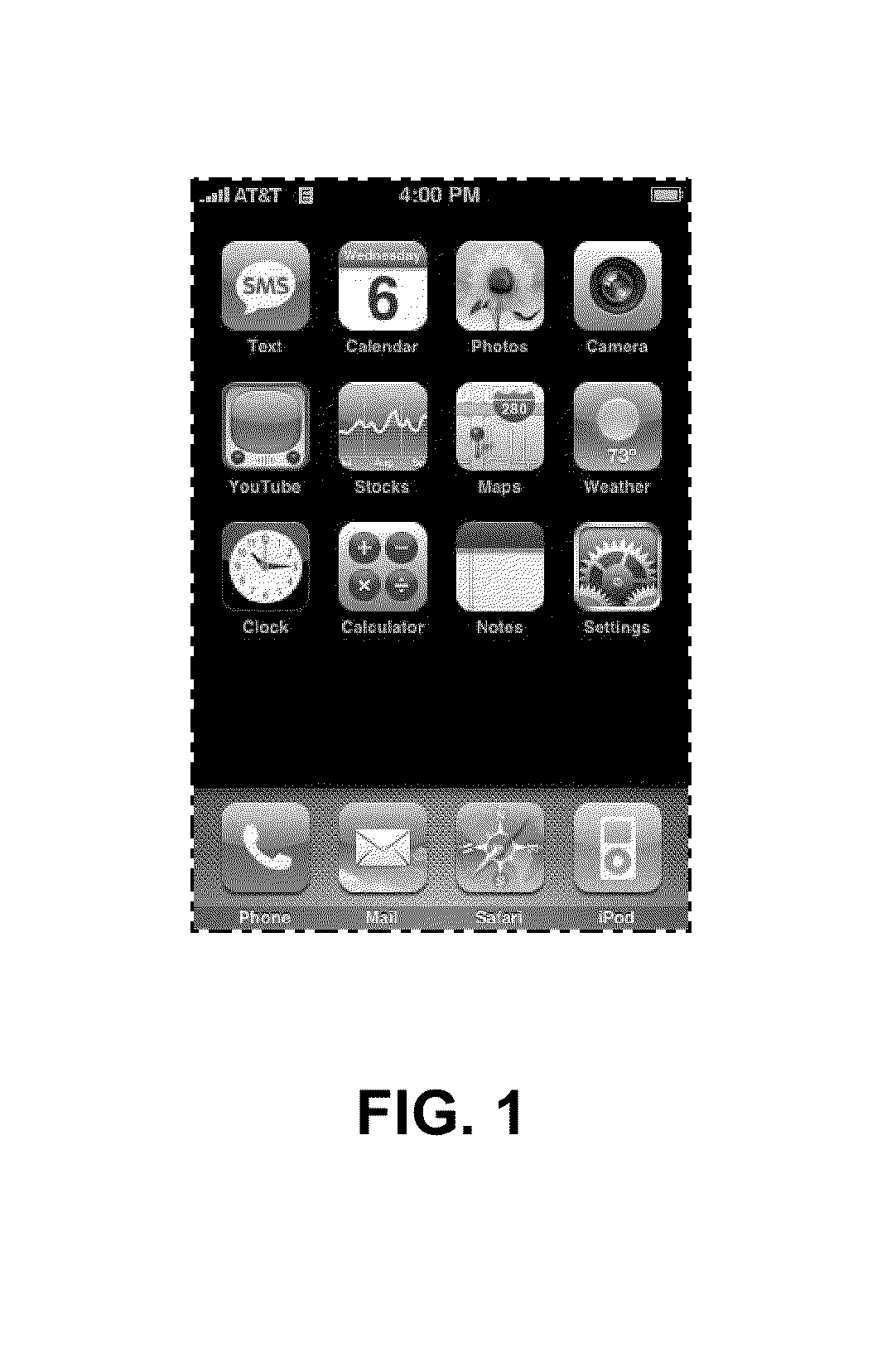
CAFC ruling 14-1335 states that D618,677, D593,087 and D604,305 claim designs embodied in the iPhone, and that US 7,469,381, 7,844,915 and 7,864,163 claim functions of its interface. It refers to the iPhone, and to the 3G/3GS for trade dress, not specifically to the first model. Announced 2007-01-09, on sale 2007-06-29.
Apple II: moderate link, specific model not established
US 4,136,359 (Wozniak): filed 1977-04-11, granted 1979-01-23. The National Inventors Hall of Fame links it to the personal computer; its coverage of the specific Apple II is not documented here. Shown 1977-04-17, shipped 1977-06-10.
iPad: claimed by Apple
Design D504,889 (Jobs and Ive among the inventors): filed 2004-03-17, granted 2005-05-10. Apple alleged before the Federal Circuit (12-1105, 2012) that the iPad embodies this design; not independently verified. iPad announced 2010-01-27, on sale 2010-04-03.
US 7,469,381: documented link to iPhone and iPad families
CAFC ruling 12-1105 (2012) describes the bounce-back feature at the edge of a document and states that it is found on Apple smartphones and tablets, such as the iPhone and iPad. It does not identify a specific model here.
iPod and Apple Watch: leads only
iPod: design application 29/153,169 'Media player' (2001-10-22), cited in US 7,046,230; the resulting patent and its product link have not been identified. Apple Watch: D756,823 (filed 2015-03-06, granted 2016-05-24), linked only through title, inventors and press reports.
Press mappings: uncorroborated
MacTech (Jun 1, 2010) assigns D616892 to iPad, D616863 to iPod nano, D616864 to iPod classic, D616881 to MacBook Air, D616899 to iPod shuffle. I have not seen a document or drawing that confirms or contradicts it; D616892 appears as a graphical interface, which does not exclude it from being from the iPad.
No documented cases
Classic 80s Mac, AirPods, HomePod, Apple TV and peripherals.
In the US, ordinary design applications are not subject to the 18-month publication rule; the document becomes public on grant. Utility patent applications are usually published about 18 months from the earliest recognized date, with exceptions such as non-publication requests or secrecy orders. Provisional applications are not published under that rule. Their contents may still become public in a later case record.
In these cases, little information was public before launch. The iPhone design patents were granted after it went on sale (D593,087: filed 2007-07-30, a month later). Exception: iPad design D504,889 was public almost five years before the announcement, but its product link is only an allegation by Apple.
This describes this sample. It supports neither "almost always after launch" beyond this sample nor the opposite.
Appendix to Apple v. Samsung (document 3647-5, 2018-04-09): 50 distinct designs asserted by Apple. They were selected for litigation, not a census or a representative sample of Apple, and the appendix does not identify a product for each design. They are an example of a dated dataset.
The documented historical dates and links are facts, and so are the gaps measured with them. It is a hypothesis to extrapolate them to future products; They can be used for scenarios, always labeled.
H1: technology shortens lead times
Compare periods and families. The five calendar products are not enough to affirm or deny the hypothesis: the lags range from 18 to 227 days, with no clear trend in this sample.
H2: applications anticipate families
Test a rule against a baseline frequency, using published applications, dates and classes. That systematic dataset is not yet available.
H3: design and launch
In this sample, design patents tend to be granted near or after the start of sales. This is not a general claim about all Apple products.
Launch forecasts: experimental design
A forecast is a reasoned, traceable hypothesis, not a certainty. No system has been implemented and no probabilities calibrated; calibration would require measuring outcomes first.
Each forecast is written before the fact, with the date: product or family, expected window, and the public evidence that supports it (published applications, granted designs, Apple's previous calendar).
Record what would refute it (for example, no announcement within the forecast window) and the uncertainty level in words: low, medium or high.
It is saved in a record that is not edited. When the date arrives, it is compared with the real date in the Apple newsroom.
Only after enough forecasts have reached their outcome can we test whether they beat a simple baseline (frequency per quarter). Until then, they are hypotheses.
9. Still to check
Status (expired, abandoned, maintenance fees unpaid): not yet checked in the relevant records. It is not inferred from a patent's age.
Latest published applications: coverage still limited, no systematic review.
Complete annual series (2014 and before 2013) and own total: pending; The official bulk download consulted requires an account.
Links for iPod, Watch, Mac, AirPods, HomePod and Apple TV.
Base published on Nov 4, 2026. Hypotheses and pending coverage will be reviewed with new data.