
AirPort (1999)
The base station that brought Wi-Fi home: unveiled in 1999 alongside the first iBook, it turned wireless internet access into a consumer product.
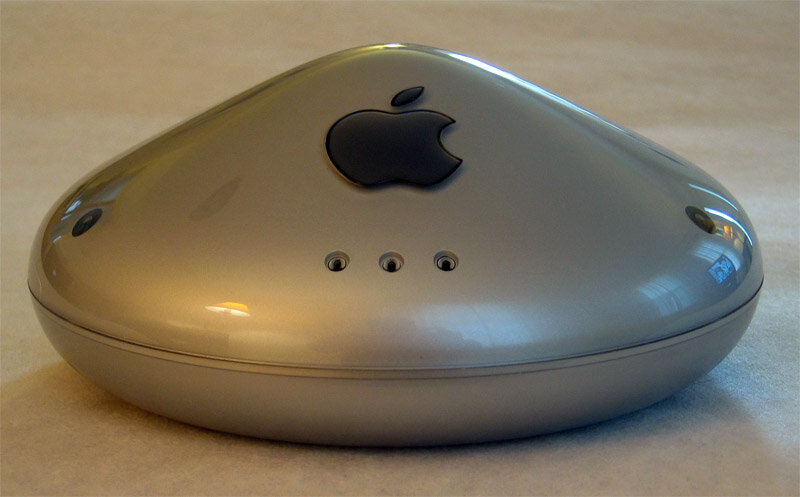
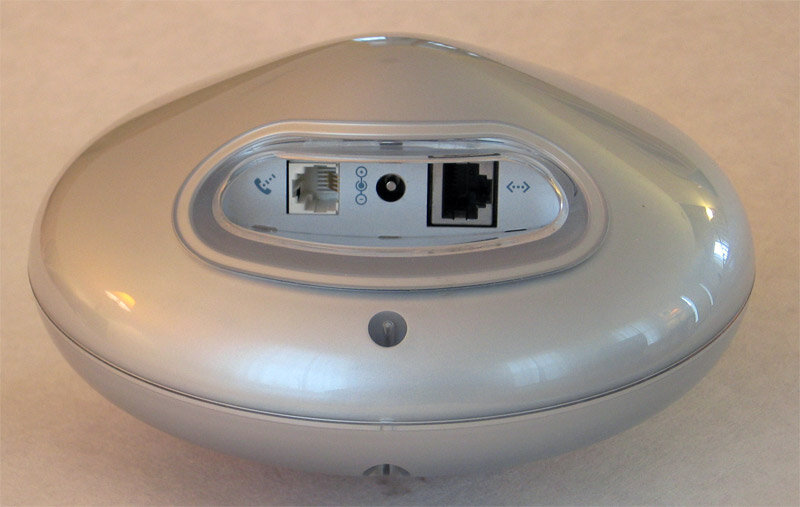
© Jared C. Benedict (redjar) · CC BY-SA 2.0 ↗ Resized, no crop or retouching.
Specs
| Connectivity | 802.11b · 11 Mbps · ~45 m |
| Price | $299 + $99 |
| Key feature | AirPort Extreme (2003) |
Launch
Unveiled by Steve Jobs on July 21, 1999 at Macworld Expo New York alongside the first iBook, according to Apple's press release that day. The moment became legendary: Jobs browsed the web on the iBook while passing it through a hula hoop to prove there were no wires, and the crowd erupted; the scene is retold in 9to5Mac's retrospective. The base station cost $299 and the optional AirPort card for the iBook $99 more, prices reported at the time by the Los Angeles Times. The keynote survives in an archival copy on the Internet Archive.
Marketing
Apple did not invent Wi-Fi, but it turned it into a consumer product. According to the account of the Lucent team developing the technology, reported by TidBITS, it was a meeting with Jobs that pulled Wi-Fi out of a decade of failed commercial attempts. Jobs stressed that AirPort was built on an open standard, 802.11, that the rest of the industry would eventually adopt - he was right. The hula-hoop demo, capped by Phil Schiller dropping from a platform onto an inflatable mattress with an iBook streaming his acceleration in real time, a scene documented by Engadget, did more to explain Wi-Fi than any spec sheet could.
Flaws and fixes
The original AirPort had clear limitations even for its time: 11 Mbps versus the 100 Mbps of wired Ethernet, an unavoidable comparison when paying $299 for the base station. The AirPort card also only fit the iBook, leaving other Macs out until Apple expanded compatibility. Between base station and card, going wireless added about $400 to the price of the computer.